Our Services
N&K Dialysis Centre (M) Sdn Bhd
We are committed to providing you with personalized and comprehensive care.
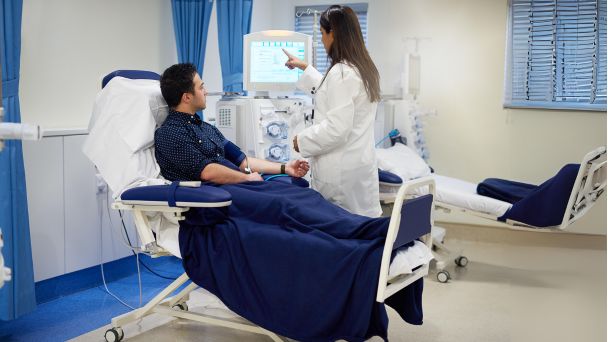
In-Center Hemodialysis
Regular dialysis sessions conducted at the center, where blood is filtered through a machine to remove waste products and excess fluids.

Home Hemodialysis
Training and support for patients to perform dialysis at home, allowing for more flexibility and convenience.

Temporary Dialysis
Services for patients who need dialysis while traveling or during temporary stays

Nutritional Counseling
Guidance from dietitians specialized in kidney health to help patients manage their diet and nutritional needs.

N&K Dialysis Centre
We are committed to providing you with personalized and comprehensive care.
Frequently Asked Questions
FAQ
Benefit from Our Highly Trained and Compassionate Dialysis Care Team
What is chronic kidney disease (CKD)?
CKD refers to kidney damage or reduced kidney function that persists for more than 3 months. It can lead to kidney failure or end-stage renal disease (ESRD), which requires dialysis or a kidney transplant.
What is dialysis?
Dialysis is a medical treatment for people with ESRD. It cleans the blood by removing waste, salt, and excess water. There are two main types of dialysis: hemodialysis (HD) and peritoneal dialysis (PD).
What are the different types of dialysis treatments?
Hemodialysis (HD) involves filtering blood outside the body using a machine, while peritoneal dialysis (PD) uses the lining of the abdomen to filter blood. The choice depends on health, lifestyle, and other factors.
Do I need dialysis if I have kidney disease?
The early stages of chronic kidney disease (CKD) can last for many years, and dialysis is not necessary during this time. However, if your kidneys fail, dialysis or a kidney transplant will be needed to keep you alive.
When should I start dialysis?
National Kidney Foundation (NKF) guidelines recommend starting dialysis when your kidney function drops to 15% or less, or if you experience severe symptoms due to kidney disease (such as shortness of breath, fatigue, muscle cramps, or nausea and vomiting).
How can I travel if I’m on dialysis?
If you’re planning to travel, ensure you have adequate dialysis medication and access to a dialysis facility. Contact your dialysis provider for assistance in planning and arranging services during your trip.